The endocannabinoid system is a complex network of receptors, enzymes, and naturally occurring compounds in your body that regulates everything from mood and memory to pain sensation and immune response. When you consume cannabis, compounds in the plant interact directly with this system, which explains why a single substance can affect such diverse aspects of health and well-being.
This interaction isn’t random. Your body produces its own cannabinoids (called endocannabinoids), and the receptors that bind with them happen to respond just as readily to cannabinoids from cannabis. Think of it as a lock-and-key mechanism that existed in your biology long before anyone ever consumed the plant.
Understanding the endocannabinoid system transforms how we think about cannabis from a recreational substance to a therapeutic tool that works with existing biological pathways. The system was only discovered in the 1990s, which explains why traditional medical education often overlooks it entirely. Yet this network influences nearly every physiological process, from how you experience pain to how your body maintains balance during stress.
For medical cannabis users, this knowledge matters in practical ways. Knowing why THC produces psychoactive effects while CBD doesn’t, or understanding how different cannabinoids target specific receptors, helps you make informed choices about products and dosing. It also explains why cannabis affects people differently and why the same strain might relieve anxiety in one person but trigger it in another.
What follows is a clear breakdown of the endocannabinoid system’s components, how cannabis compounds interact with them, and what that means for therapeutic applications. We’ll move beyond the surface-level “cannabis gets you high” narrative into the biological mechanics that make this plant uniquely suited to working with human physiology.
What the Endocannabinoid System Actually Is
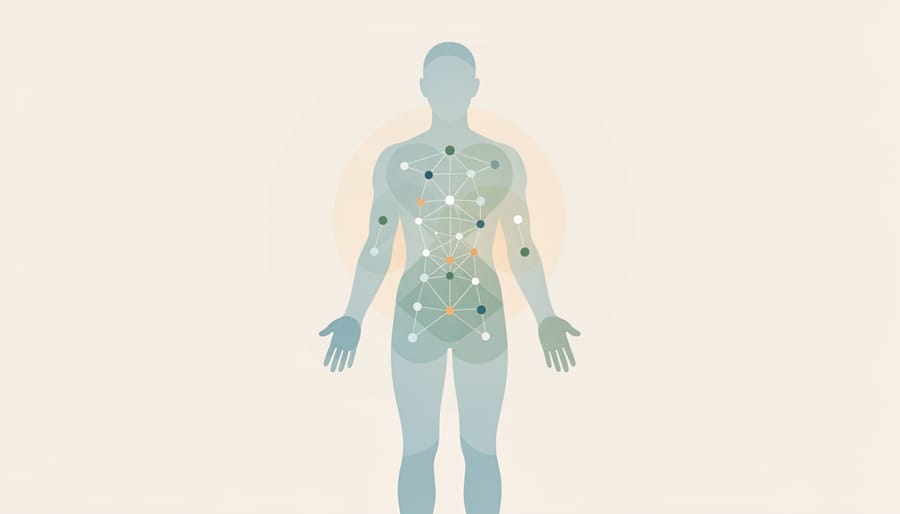
The endocannabinoid system is a vast network of chemical signals and receptors woven throughout your entire body, silently maintaining balance in everything from your immune response to your mood. Think of it as your body’s internal regulation system, constantly monitoring conditions and making tiny adjustments to keep things running smoothly. When you feel hungry, sleepy, or even a bit off-kilter, your ECS is often working behind the scenes to restore equilibrium.
Scientists didn’t stumble upon this system until the early 1990s, when researchers investigating how THC affects the brain discovered something remarkable: humans produce their own cannabis-like molecules. This breakthrough came surprisingly late in medical history, partly because the ECS doesn’t operate like traditional systems such as the circulatory or nervous systems. It works more like a communication network, sending targeted messages only when and where they’re needed rather than maintaining constant activity.
What makes the ECS truly fascinating is its universality. Every mammal on Earth has one, from your family dog to elephants and whales. This ECS in mammalian species suggests the system evolved hundreds of millions of years ago and proved so essential to survival that nature kept it across the entire evolutionary tree. In humans, ECS receptors and molecules appear in nearly every tissue type, creating an internal regulatory web that touches virtually every physiological process.
The system’s primary job is homeostasis, a fancy term for keeping your body’s internal environment stable despite external changes. When something shifts, injury causes inflammation, stress disrupts sleep, or illness throws your immune system into overdrive, your ECS steps in to restore balance. It does this by producing signaling molecules on demand, sending them to specific receptors, and then quickly breaking them down once the job is done. This dynamic, responsive approach means your ECS is always adapting to your immediate needs rather than operating on a fixed schedule.
The Three Main Components of Your Endocannabinoid System
Endocannabinoids: Your Body’s Natural Cannabis
Your body produces its own cannabis-like molecules called endocannabinoids. These aren’t substances you consume, they’re manufactured inside you, on demand, whenever your body needs to signal a correction or adjustment.
The two primary endocannabinoids are anandamide and 2-AG (2-arachidonoylglycerol). Anandamide, sometimes called the “bliss molecule,” plays a notable role in mood regulation, pain perception, and appetite control. The name comes from the Sanskrit word “ananda,” meaning joy or bliss. Your body creates it from fatty acids in cell membranes, releasing it precisely when and where it’s needed.
2-AG is your body’s most abundant endocannabinoid. It’s particularly active in your brain and immune system, contributing to pain management, inflammation control, and neurological function. Like anandamide, 2-AG is synthesized from membrane lipids at the exact moment your cells detect an imbalance.
Unlike traditional neurotransmitters that are stored and released, endocannabinoids are produced in real-time. When your body senses something’s off, pain, inflammation, stress, cells create these molecules on the spot, dispatch them to the relevant receptors, and then break them down once their job is complete. This just-in-time production makes the system remarkably efficient and responsive.
Cannabinoid Receptors: Where the Action Happens
Cannabinoid receptors are specialized proteins embedded in cell membranes throughout your body, acting as molecular switches that activate when endocannabinoids or cannabis compounds bind to them. Think of them as locks waiting for the right key, when that key fits, they trigger specific cellular responses that influence everything from pain perception to immune function.
The two main receptor types serve distinctly different purposes. CB1 receptors concentrate heavily in your brain and central nervous system, particularly in regions controlling memory, movement, pain processing, and mood. When activated, they regulate neurotransmitter release, which is why cannabis affects cognition, coordination, and pain relief. These receptors also appear in peripheral tissues including the liver, muscles, and digestive tract.
CB2 receptors reside primarily in immune cells, the spleen, and peripheral tissues. They modulate immune responses and inflammation without producing the psychoactive effects associated with CB1 activation. This is why CBD and other cannabinoids that preferentially interact with CB2 can offer therapeutic benefits, reduced inflammation, immune support, without the characteristic cannabis “high.”
Your body produces both receptor types, but their distribution and density vary between individuals, partly explaining why people respond differently to the same cannabis products.
Enzymes: The System’s Quality Control
Think of enzymes as your body’s cleanup crew, ensuring your endocannabinoid system doesn’t get overwhelmed. After endocannabinoids like anandamide and 2-AG deliver their messages and dock with receptors, they need to be cleared out so the system can respond to new signals. That’s where two key enzymes step in.
FAAH (fatty acid amide hydrolase) specializes in breaking down anandamide once it’s finished its job. This enzyme acts like a molecular recycling program, quickly dismantling anandamide so your receptors stay available for fresh signals. MAGL (monoacylglycerol lipase) does the same for 2-AG, though it works a bit differently in how it processes this endocannabinoid.
This breakdown process isn’t just housekeeping. It’s crucial for preventing your system from becoming desensitized or sluggish. Without these enzymes constantly regulating endocannabinoid levels, you’d lose the precision that makes the ECS so effective at maintaining balance.
Interestingly, some cannabis compounds influence these enzymes directly. CBD, for example, can slow down FAAH activity, allowing anandamide to stick around longer and potentially enhancing its calming effects. This enzymatic interaction is one reason medical cannabis can sometimes amplify your body’s natural balancing mechanisms rather than just introducing external compounds.
How the Endocannabinoid System Works in Your Body
The endocannabinoid system operates like a highly responsive monitoring network, constantly scanning your body for signs that something has gone off balance. Unlike other biological systems that run continuously, the ECS activates on demand, springing into action only when it detects a problem that needs correction.
Here’s what happens in real time. Your body continuously monitors vital functions like temperature, inflammation levels, pain signals, and stress hormones. When sensors detect an imbalance, say, tissue damage from an injury or a spike in stress hormones, nearby cells immediately start producing endocannabinoids at the exact location where they’re needed. This targeted, localized response is one of the ECS’s defining features.
Once created, these endocannabinoids travel backward across synapses (the gaps between nerve cells) to bind with cannabinoid receptors. This reverse signaling is unusual in the body and allows the ECS to fine-tune how cells communicate. When an endocannabinoid locks onto a receptor, it triggers a specific cellular response designed to restore balance. The receptor might tell a nerve cell to stop sending pain signals, instruct an immune cell to reduce inflammation, or signal the brain to dial down anxiety.
Consider a practical example: you twist your ankle. Damaged tissue releases inflammatory signals and pain messages that flood toward your brain. The ECS detects this surge and produces endocannabinoids right at the injury site. These molecules bind to CB1 receptors on nearby nerve endings, reducing the volume of pain signals transmitted to your brain. Simultaneously, they activate CB2 receptors on immune cells, modulating the inflammatory response to prevent excessive swelling while still allowing necessary healing processes.
The same mechanism applies to mood regulation. When you experience chronic stress, your ECS can become overtaxed. In a balanced state, endocannabinoids help regulate the release of neurotransmitters like serotonin and dopamine, keeping your emotional responses proportionate to actual threats. They act as a buffer, preventing your stress response from spiraling out of control.
After endocannabinoids complete their signaling task, enzymes quickly break them down. This destruction prevents overstimulation and keeps the system ready to respond to the next imbalance. The entire cycle, detection, production, signaling, and breakdown, can occur within minutes, making the ECS one of your body’s fastest-acting regulatory systems. This rapid-response capability explains why cannabis compounds can produce noticeable effects relatively quickly when they interact with this existing biological infrastructure.
How Cannabis Compounds Interact with the ECS
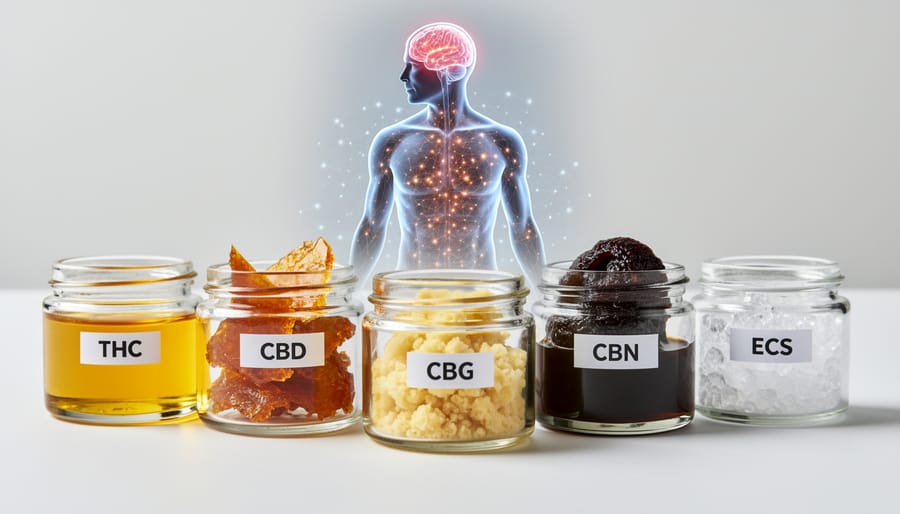
THC: The Direct Activator
THC works like a molecular key that fits perfectly into your brain’s CB1 receptor locks. When you consume cannabis, THC molecules travel through your bloodstream and into your brain, where they dock onto CB1 receptors scattered throughout your nervous system. What makes THC so potent is its striking similarity to anandamide, your body’s own “bliss molecule.” But there’s a crucial difference: while anandamide gets broken down quickly by enzymes, THC sticks around much longer, creating sustained activation that your body never naturally experiences.
This extended activation is why THC binds CB1 receptors and produces both the characteristic high and therapeutic effects. In your brain, it alters how neurons communicate, which explains the euphoria, altered time perception, and heightened sensory experiences. In your body’s peripheral nervous system, it can interrupt pain signals and reduce inflammation. The same mechanism that creates psychoactive effects also delivers medical benefits like appetite stimulation in cancer patients, muscle relaxation for spasticity, and nausea relief during chemotherapy. Understanding this dual nature helps medical cannabis users appreciate why dosage and timing matter so much for achieving therapeutic goals while managing unwanted effects.
CBD: The Indirect Modulator
CBD operates like a behind-the-scenes conductor rather than a direct player. Unlike THC, which locks onto CB1 receptors like a key in a lock, CBD takes a more subtle approach. It doesn’t bind strongly to CB1 or CB2 receptors, instead, it influences how your body uses its own endocannabinoids.
One of CBD’s primary mechanisms involves inhibiting the FAAH enzyme, the same enzyme that breaks down anandamide. By slowing FAAH’s activity, CBD allows your natural “bliss molecule” to stick around longer in your system, amplifying its effects without introducing external stimulation. Research indicates CBD shows CB1/CB2 complexity in its receptor interactions, acting as a modulator rather than a direct agonist.
CBD also interacts with other receptor systems entirely, serotonin receptors, vanilloid receptors, and GPR55, creating therapeutic effects through multiple pathways simultaneously. This indirect approach explains why CBD produces calming, anti-inflammatory benefits without the high associated with THC. It’s enhancing your body’s existing regulatory signals rather than overriding them with a potent external compound.
The Entourage Effect in Action
The entourage effect describes how cannabis compounds work better together than in isolation, a synergistic relationship that plays out through the endocannabinoid system. When you use whole-plant cannabis medicine, you’re not just getting THC or CBD; you’re accessing a complex blend of cannabinoids, terpenes, and flavonoids that interact with multiple ECS targets simultaneously.
Here’s what makes this synergy powerful: minor cannabinoids like CBG and CBN activate different receptors and pathways than the major players. Terpenes such as myrcene and limonene influence how cannabinoids bind to receptors and cross into your brain. Some compounds block enzymes that break down endocannabinoids, allowing your body’s natural molecules to work longer. Others modulate receptor sensitivity, changing how strongly effects manifest.
This multi-target approach often produces therapeutic effects that isolated compounds can’t match. A CBD-dominant formula with trace THC and supporting terpenes might relieve inflammation more effectively than pure CBD alone. Full-spectrum products that preserve the plant’s chemical diversity tend to require lower doses for the same benefit, your ECS responds to the orchestrated signal rather than a single blunt input.
The entourage effect explains why two products with identical THC percentages can feel completely different. What matters isn’t just cannabinoid content but the full chemical conversation happening across your endocannabinoid system. It’s biological teamwork at the molecular level.
What the ECS Regulates: Systems and Functions
Your endocannabinoid system doesn’t just handle one job. It acts like a master regulator, touching nearly every major system in your body to keep things running smoothly.
Pain perception stands as one of the ECS’s most studied roles. When you experience injury or inflammation, your body produces endocannabinoids that bind to receptors in your nervous system, modulating pain signals before they reach your brain. This natural pain control mechanism explains why medical cannabis shows such promise for chronic pain conditions. Both THC and CBD and the ECS work together to enhance this built-in pain management system.
Your immune system relies heavily on ECS regulation too. CB2 receptors concentrate in immune tissues, where they help control inflammatory responses. This connection makes cannabis particularly relevant for autoimmune conditions and inflammatory diseases, from arthritis to inflammatory bowel disorders.
Mood and stress responses flow through the ECS as well. The system helps regulate serotonin and dopamine signaling, explaining why cannabis affects anxiety, depression, and emotional balance. Anandamide, whose name comes from the Sanskrit word for bliss, plays a central role in this emotional regulation.
Appetite and metabolism represent another crucial ECS territory. CB1 receptors in your digestive system and brain influence hunger signals, nutrient processing, and energy storage. This is why THC famously triggers hunger while certain cannabis compounds may help regulate weight.
Sleep cycles depend on ECS function too. The system helps coordinate your circadian rhythm, determining when you feel alert versus drowsy. Many medical cannabis users report improved sleep quality, likely because cannabinoids help strengthen these natural sleep-wake signals.
Memory formation and learning involve the ECS as well, particularly through CB1 receptors in the hippocampus. Understanding how CBD works differently than THC becomes important here, since CBD vs THC shows distinct effects on memory and cognition.
Even reproductive health connects to the ECS, which helps regulate fertility, pregnancy, and hormonal balance. The breadth of these systems explains why cannabis produces such varied therapeutic effects, it engages a regulatory network that already touches almost everything your body does.
Clinical Endocannabinoid Deficiency: When Your ECS Needs Support

Some researchers believe that an underactive endocannabinoid system might contribute to certain chronic conditions that don’t respond well to conventional treatments. This concept, called Clinical Endocannabinoid Deficiency (CED), suggests that low levels of endocannabinoids or reduced receptor function could leave the body struggling to maintain balance.
The theory emerged from observing patterns in conditions like migraine, fibromyalgia, and irritable bowel syndrome. These disorders share common features: they’re difficult to treat, they involve heightened pain sensitivity, and they often occur together in the same patients. Dr. Ethan Russo proposed that these conditions might stem from insufficient endocannabinoid tone, similar to how other deficiencies cause disease.
When your ECS isn’t producing enough endocannabinoids or your receptors aren’t responding properly, the regulatory system can’t perform its job effectively. Pain signals may amplify unchecked, inflammation persists longer than necessary, and mood regulation falters. This creates a cascade of symptoms that conventional medicine addresses symptom-by-symptom rather than tackling the underlying regulatory failure.
Medical cannabis offers a potential solution through ECS modulation. Plant cannabinoids can supplement your body’s natural endocannabinoids, essentially providing the molecules your system isn’t producing in sufficient quantities. THC directly activates receptors, while CBD helps your existing endocannabinoids work more effectively by slowing their breakdown.
While CED remains a working theory requiring more research, many medical cannabis patients report significant relief from conditions that match this profile. The therapeutic success stories from our community suggest there’s genuine value in supporting an underactive ECS, even as scientists work to fully understand the mechanisms involved.
Common Questions About the ECS and Cannabis
Can you improve your ECS naturally without cannabis?
Yes. Regular exercise, omega-3 fatty acids from fish and nuts, stress reduction practices like meditation, and adequate sleep all support your ECS by promoting endocannabinoid production and receptor health. These lifestyle factors work synergistically with medical cannabis when you choose to incorporate it.
Does everyone have the same endocannabinoid system?
No. Like other biological systems, ECS function varies significantly between individuals due to genetics, age, overall health, and lifestyle factors. This natural variation explains why two people using identical cannabis products may experience different effects, and why personalized approaches to medical cannabis work best.
Can you damage your endocannabinoid system with cannabis?
Heavy, prolonged use may temporarily downregulate CB1 receptors, potentially requiring higher doses for the same effect. However, these changes appear reversible with reduced use or abstinence, and moderate medical cannabis consumption doesn’t cause permanent ECS damage in most adults.
Why does cannabis affect people so differently?
Individual ECS differences play a major role: variations in receptor density, natural endocannabinoid levels, and enzyme activity all influence how you metabolize and respond to cannabis. Body composition, previous cannabis exposure, and even what you’ve eaten can shift the experience dramatically from person to person.
Understanding these individual differences empowers you to approach medical cannabis with realistic expectations. Your unique ECS profile means your optimal dosing, product type, and consumption method may differ from what works for others in the community. This isn’t a limitation, it’s an opportunity to discover what truly supports your specific wellness needs. Many HempLife Alliance members find that tracking their responses over time reveals patterns that help them fine-tune their approach. Start low, go slow, and pay attention to how your body communicates through the very system cannabis is designed to engage.
Understanding how the endocannabinoid system works transforms cannabis from a mystery into a tool you can use with confidence. When you know that THC activates CB1 receptors in your brain or that CBD enhances your body’s natural endocannabinoid activity, you’re not just using cannabis, you’re supporting a biological system that exists specifically to maintain your health and balance.
This knowledge puts you in the driver’s seat. You can have informed conversations with healthcare providers, choose products that match your specific needs, and understand why certain strains or ratios work better for you than others. The ECS explains the “why” behind every therapeutic effect you experience.
The science of the endocannabinoid system is still young and rapidly evolving. Researchers continue uncovering new receptors, mechanisms, and therapeutic possibilities almost monthly. What we know today represents just the beginning of a much larger story about how our bodies interact with cannabis compounds. That’s exciting, because it means better treatments, more targeted therapies, and deeper understanding are coming.
You’re part of a community that’s driving this innovation forward. Whether you’re a medical cannabis user, an industry professional, or an advocate, your experiences and questions contribute to our collective knowledge. Share what works for you, stay curious about new research, and connect with others who understand this journey.
The endocannabinoid system isn’t just biology, it’s your body’s natural pathway to wellness, and cannabis is the key that helps unlock its full potential.