
The endocannabinoid system is a complex cell-signaling network in your body that regulates everything from mood and memory to pain sensation and immune response. This biological system exists in all vertebrates and works constantly to maintain balance, or homeostasis, across nearly every major bodily function. When you introduce CBD into your body, it interacts with this system in ways that differ significantly from THC and other cannabinoids, which is why understanding this relationship matters whether you’re considering CBD for wellness, managing a specific condition, or simply curious about how these compounds work at a biological level.
Discovered in the 1990s while researchers were investigating how THC affects the body, the endocannabinoid system turned out to be far more significant than anyone initially expected. Your body produces its own cannabinoids, called endocannabinoids, which bind to receptors throughout your nervous system and organs. This discovery changed how scientists understand human physiology and opened entirely new avenues for therapeutic applications.
CBD’s relationship with this system is nuanced. Unlike THC, which directly activates cannabinoid receptors and produces intoxicating effects, CBD works more subtly by influencing how your body uses its own endocannabinoids and interacting with related receptor systems. This distinction explains why CBD doesn’t get you high but still produces noticeable effects that millions of people report experiencing.
In this guide, we’ll break down how the endocannabinoid system functions, explore its key components, and explain exactly how CBD influences this remarkable biological network that science only recently revealed.
What the Endocannabinoid System Actually Is
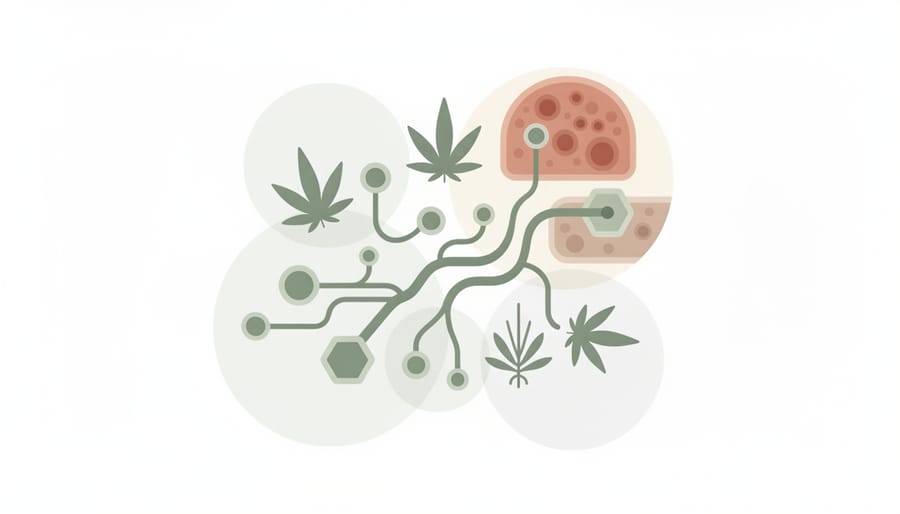
Think of the endocannabinoid system as your body’s internal balancing act. It’s a vast network of receptors, natural compounds, and enzymes working behind the scenes to keep everything running smoothly, from your mood and sleep to how you feel pain and fight inflammation. Discovered in the 1990s while researchers were studying how cannabis affects the brain, the ECS turned out to be one of the most important regulatory systems you’ve never heard of.
Here’s what makes it so remarkable: the ECS doesn’t control one specific function. Instead, it acts like a master conductor, stepping in wherever balance is needed. If your body temperature spikes, it helps cool you down. If inflammation flares up, it works to calm the response. This process of maintaining internal stability is called homeostasis, and the ECS is central to it.
- Endocannabinoids
- Natural compounds produced by your own body that activate cannabinoid receptors. The two main ones are anandamide and 2-AG, created on-demand when your body needs them.
- Cannabinoid Receptors (CB1 & CB2)
- Protein structures found throughout your body that receive signals from endocannabinoids. CB1 receptors are mostly in the brain and nervous system, while CB2 receptors are concentrated in immune cells and organs.
- Enzymes
- Specialized proteins that break down endocannabinoids once they’ve done their job. The main enzymes are FAAH and MAGL, which ensure signals don’t overstay their welcome.
- Homeostasis
- The state of internal balance your body constantly works to maintain. The ECS helps regulate temperature, mood, appetite, immune response, and more to keep you in equilibrium.
What’s fascinating is that every human being has an endocannabinoid system, regardless of whether they’ve ever used cannabis. It’s hardwired into us, quietly influencing nearly every aspect of our health. When you introduce CBD or other cannabinoids from hemp and cannabis plants, you’re essentially supporting a system that was already there, giving it an extra boost to do what it does best, keep you balanced and thriving.
How the Endocannabinoid System Works in Your Body

Think of the endocannabinoid system as your body’s internal maintenance crew, constantly checking in on different departments to make sure everything is running smoothly. When something gets out of balance, stress levels spike, inflammation flares up, sleep gets disrupted, the ECS springs into action with a simple but elegant process.
Here’s how it works: your body produces endocannabinoids on demand, right when and where they’re needed. Unlike hormones that circulate in your bloodstream waiting for the right moment, endocannabinoids are made fresh at the site of the problem. Imagine a fire alarm that doesn’t just sound in a central office but gets built right where the smoke is. When a cell detects an issue, it synthesizes endocannabinoids from fatty acids in its own membrane.
Once created, these endocannabinoids travel backward across the synapse (the gap between nerve cells) to bind with cannabinoid receptors on neighboring cells. This is the signal. When an endocannabinoid locks into a receptor, it triggers a specific response: dial down that pain signal, reduce inflammation, regulate appetite, calm anxiety. The message is always about restoring balance.
After the receptor delivers its message and the cell responds, the endocannabinoid’s job is done. This is where enzymes step in as the clean-up crew. They break down the used endocannabinoids quickly, preventing them from overstaying their welcome and keeping the system precise. The whole cycle happens fast, often in minutes, which allows your body to respond to changing conditions in real time.
What makes this system so powerful is its responsiveness. You don’t have a constant flood of endocannabinoids circulating aimlessly. Instead, your body produces exactly what it needs, exactly where it needs it, and clears it away when the job is finished. It’s a feedback loop designed for fine-tuning, not broad strokes, which is why the ECS touches everything from mood and memory to immune function and pain perception without throwing your whole system into chaos.
The Main Components of the Endocannabinoid System
Cannabinoid Receptors: CB1 and CB2
CB1 receptors cluster heavily in the brain and central nervous system, particularly in areas that control movement, memory, pain perception, and appetite. When activated, they modulate neurotransmitter release, essentially fine-tuning how brain cells communicate. This is why THC, which binds directly to CB1, produces its characteristic psychoactive effects. You’ll also find CB1 receptors in the liver, lungs, and reproductive organs, where they help regulate metabolism and other processes.
CB2 receptors, by contrast, concentrate mainly in the immune system and peripheral tissues. They’re abundant in the spleen, tonsils, and white blood cells, playing a key role in managing inflammation and immune response. When CB2 receptors activate, they can dial down inflammatory signals and support the body’s natural repair mechanisms. This distribution pattern explains why cannabinoids show promise for conditions involving immune dysfunction or chronic inflammation.
Both receptor types respond to your body’s own endocannabinoids, but they can also interact with plant-based cannabinoids from cannabis and hemp. Understanding where these receptors live and what they control helps explain why the endocannabinoid system influences such a wide range of bodily functions.
Endocannabinoids: Your Body’s Own Cannabis
Your body produces its own cannabis-like molecules called endocannabinoids, the “endo” means “within,” so these are cannabinoids from inside you. The two main players are anandamide and 2-AG (short for 2-arachidonoylglycerol, thankfully).
Anandamide gets its name from “ananda,” the Sanskrit word for bliss, and it lives up to that reputation. Your brain makes it on demand when cells need to communicate, and it binds primarily to CB1 receptors. Think of it as your body’s natural mood regulator and pain buffer. You produce more during exercise (contributing to that runner’s high), social connection, and even when you eat chocolate.
2-AG is the more abundant of the two and works throughout your body, binding to both CB1 and CB2 receptors. It plays a bigger role in immune function and inflammation control, acting as a molecular peacekeeper when your system gets overstimulated.
Unlike the cannabinoids in cannabis plants, your endocannabinoids are fragile and short-lived. Your body creates them exactly when and where they’re needed, they do their job, and enzymes quickly break them down, usually within minutes.
Enzymes: The Clean-Up Crew
Once your body’s endocannabinoids have done their job, they don’t just linger, enzymes quickly step in to break them down and reset the system. These enzymes are precision tools, ensuring your endocannabinoid signals stay sharp and responsive rather than overstaying their welcome.
The two main players are FAAH (fatty acid amide hydrolase), which breaks down anandamide, and MAGL (monoacylglycerol lipase), which handles 2-AG. Think of them as the cleanup crew after a concert: they clear the stage so the next performance can start fresh. Without them, endocannabinoids would accumulate, potentially throwing off the delicate balance your ECS works to maintain.
Interestingly, CBD can slow down FAAH, allowing anandamide to hang around a bit longer. That’s one way CBD supports your endocannabinoid system, by letting your own cannabinoids do more work.
How CBD Interacts with the Endocannabinoid System
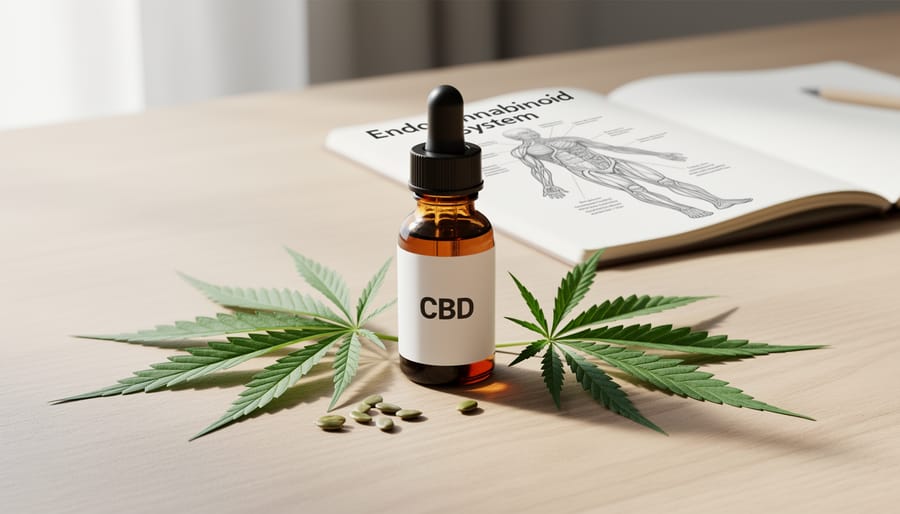
CBD’s relationship with the endocannabinoid system is less like a key fitting into a lock and more like a skilled orchestra conductor guiding the entire ensemble. While THC binds directly to CB1 and CB2 receptors, producing the well-known psychoactive effects, CBD takes a completely different approach that makes it uniquely valuable for medical cannabis applications.
Instead of activating cannabinoid receptors head-on, CBD works behind the scenes to keep your body’s own endocannabinoids in circulation longer. It does this primarily by inhibiting FAAH, the enzyme responsible for breaking down anandamide. When FAAH can’t do its job efficiently, anandamide levels rise naturally in your system. Higher anandamide means enhanced mood regulation, better pain management, and improved overall balance, all without adding synthetic chemicals or overwhelming your receptors.
CBD also interacts with receptors beyond the traditional cannabinoid receptors. It binds to serotonin receptors (5-HT1A), which helps explain its anxiety-reducing effects. It activates TRPV1 receptors involved in pain perception and inflammation. It even influences GPR55, sometimes called the “orphan receptor,” which plays a role in bone density and blood pressure regulation. This multi-receptor approach is why CBD can address such a wide range of conditions without the intense psychoactivity of THC.
Another fascinating mechanism: CBD acts as a negative allosteric modulator of CB1 receptors. In plain terms, it changes the shape of the receptor slightly, making it less responsive to THC. This is why CBD can actually soften or balance out THC’s effects when both cannabinoids are present, a phenomenon many medical cannabis users intentionally harness for symptom relief without cognitive impairment.
For medical cannabis communities, this matters tremendously. You can use CBD to support your endocannabinoid system’s natural function rather than forcing it in one direction. Whether you’re managing chronic pain, reducing inflammation, or addressing anxiety, CBD enhances what your body is already trying to do. It’s a gentler, more sustainable approach that respects the ECS’s complexity while delivering real therapeutic benefits that countless users experience daily.
Medical Cannabis and the Endocannabinoid System: Real-World Applications
Understanding how the endocannabinoid system functions has revolutionized medical cannabis applications, transforming what was once seen as alternative therapy into evidence-based treatment. By targeting the same receptors and pathways that our own endocannabinoids use, cannabis-derived compounds can help restore balance when the ECS isn’t functioning optimally.
The most common conditions benefiting from this targeted approach involve systems where the ECS plays a central regulatory role. Chronic pain has been at the forefront of medical cannabis use for years, and the reason is clear: both CB1 and CB2 receptors modulate pain signals throughout the nervous system and inflammation sites. When cannabinoids activate or influence these receptors, they can reduce pain intensity and improve quality of life for people dealing with arthritis, fibromyalgia, neuropathic pain, and injury-related discomfort.
Epilepsy treatment has seen particularly dramatic breakthroughs thanks to ECS research. CBD-rich formulations have demonstrated remarkable effectiveness in reducing seizure frequency, especially in treatment-resistant forms like Dravet syndrome and Lennox-Gastaut syndrome. Parents and patients within the medical cannabis community have shared powerful stories of children experiencing their first seizure-free weeks after years of uncontrolled episodes, highlighting real-world impact that extends beyond clinical trials.
The ECS also regulates mood and stress response through CB1 receptors in the brain’s emotional centers. People managing anxiety disorders often find relief through carefully dosed CBD or balanced THC:CBD products that support endocannabinoid tone without causing intoxication. It’s not about getting high; it’s about helping an overactive stress response find equilibrium.
Key medical applications supported by ECS interaction include:
- Pain management in chronic conditions and acute injuries
- Seizure reduction in epilepsy and related neurological disorders
- Anxiety relief and mood stabilization
- Anti-inflammatory effects for autoimmune and inflammatory conditions
- Neuroprotection in neurodegenerative diseases
Inflammation control represents another major application. CB2 receptors throughout the immune system can dampen excessive inflammatory responses, which is why medical cannabis users with conditions like Crohn’s disease, rheumatoid arthritis, and multiple sclerosis report meaningful symptom relief. The innovation happening in product development, from targeted topicals to precise-dose capsules, reflects a growing sophistication in matching cannabinoid profiles to specific ECS pathways.
What makes this field particularly exciting is how patient experience and clinical research inform each other. Advocacy groups and the medical cannabis community continue to push for better research, share their treatment journeys, and help shape products that genuinely address unmet medical needs rather than just chasing trends.
Common Questions About the CBD Endocannabinoid System
Does everyone have an endocannabinoid system?
Yes, every human (and most animals) has an endocannabinoid system. It develops early in life and remains active throughout your entire lifespan, working constantly to keep your body balanced.
Can you support your ECS naturally without cannabis?
Absolutely. Exercise, quality sleep, omega-3 fatty acids, stress management, and even dark chocolate can boost endocannabinoid production and receptor function. Cannabis and CBD are tools, not the only way to nurture this system.
What is clinical endocannabinoid deficiency?
It’s a theory suggesting that some chronic conditions, like migraines, fibromyalgia, and IBS, might stem from an underactive ECS that isn’t producing enough endocannabinoids. Research is ongoing, but it’s a compelling framework for understanding why cannabinoids help certain people dramatically.
How long have scientists known about the endocannabinoid system?
The first cannabinoid receptor was discovered in 1988, and anandamide was identified in 1992. The ECS is a relatively recent discovery in medical science, which is why so much exciting research is still unfolding today.
These questions come up constantly in the medical cannabis community, and the answers reveal something important: the endocannabinoid system isn’t just relevant to cannabis users. It’s a fundamental part of human biology that everyone can learn to support. Whether you choose CBD, lifestyle changes, or a combination, understanding your ECS gives you more control over your wellness journey.
What makes this knowledge powerful is how it shifts the conversation. Instead of asking “Does cannabis work?”, we can ask “How does my body’s own system respond to support?” That’s a question grounded in biology, not belief, and it’s opened doors for countless people seeking natural relief.
Understanding the endocannabinoid system changes how we think about health. This remarkable network touches nearly every aspect of how our bodies maintain balance, respond to stress, and heal. As research continues to uncover its intricacies, we’re learning that supporting the ECS, whether through CBD, lifestyle choices, or medical cannabis, opens doors to wellness strategies our ancestors never imagined.
The medical cannabis community stands at an exciting crossroads. Scientists are mapping new pathways, clinicians are refining treatment protocols, and everyday people are reclaiming their health through informed choices. Every discovery about the ECS strengthens our collective understanding of why cannabis has been valued across cultures for millennia.
At HempLife Alliance, we’re committed to keeping you at the forefront of this knowledge revolution. Join our community to connect with fellow enthusiasts, access the latest research insights, and share your own journey with cannabinoids. Whether you’re exploring CBD for the first time or deepening your expertise, you belong here. Together, we’re not just learning about the endocannabinoid system, we’re pioneering a future where plant-based wellness is accessible, understood, and celebrated.