
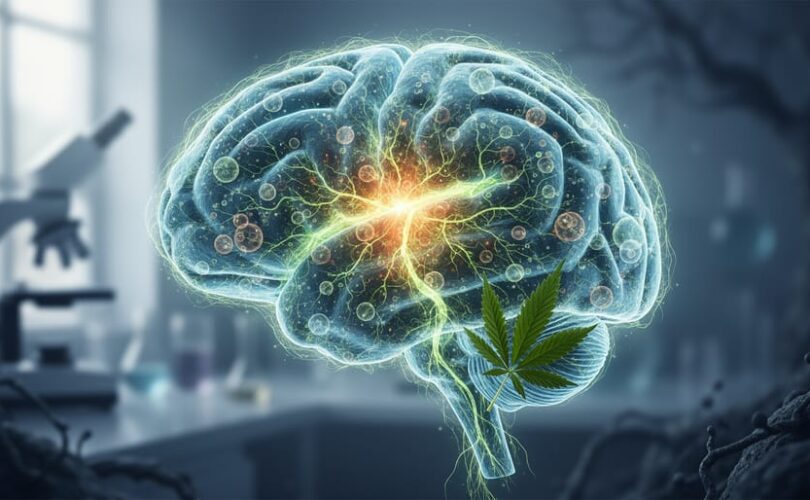
The endocannabinoid system (ECS) is a complex network of receptors, enzymes, and naturally produced compounds that regulates essential functions in your body, from mood and memory to pain perception and immune response. When you consume cannabis, compounds like THC and CBD interact directly with this system, which explains why the plant produces such wide-ranging effects.
Discovered in the 1990s while researchers were studying how cannabis affects the brain, the ECS turned out to be one of the body’s most important regulatory systems. Every person has one, whether they’ve ever used cannabis or not. Your body produces its own cannabinoids (called endocannabinoids) that bind to specialized receptors throughout your nervous system, organs, and tissues. These internal messengers help maintain balance, or what scientists call homeostasis.
Here’s what makes this connection fascinating: cannabis compounds mimic and interact with your body’s own chemical messengers. THC fits into the same receptors that your natural endocannabinoids use, while CBD works more indirectly, influencing how your system responds. This biological compatibility explains why cannabis has been used medicinally for thousands of years and why modern research continues to uncover new therapeutic applications.
Understanding how the ECS and cannabis work together isn’t just academic curiosity. It’s the foundation for making informed choices about medical cannabis use, selecting the right products for specific needs, and grasping why individual responses to the same strain or dose can vary so dramatically. Whether you’re exploring cannabis for chronic pain, anxiety, sleep issues, or simply want to understand what’s happening in your body when you consume it, the endocannabinoid system is where the story begins.
This article breaks down the science without the jargon, exploring how each component works and what it means for your cannabis experience in 2026.
What the Endocannabinoid System Really Means for Your Body

The endocannabinoid system is a vast communication network running through your entire body, constantly working behind the scenes to keep everything in balance. Think of it as your body’s internal thermostat, when something tips too far in one direction, the ECS steps in to dial it back to normal. Scientists didn’t discover this crucial system until the early 1990s, making it one of the most recent major biological breakthroughs. Researchers stumbled upon it while investigating how THC affects the brain, which led them down a path that revealed an entire regulatory system present in nearly every living creature with a backbone.
What makes the ECS remarkable is its role in homeostasis, the state of equilibrium your body constantly strives to maintain. Whether you’re stressed, injured, sleep-deprived, or fighting off an illness, your endocannabinoid system kicks into gear to restore balance. It’s less like a single organ and more like an orchestra conductor, coordinating responses across multiple systems, nervous, immune, digestive, and more, to keep the symphony of your body playing in harmony.
- Endocannabinoid system
- A biological network of receptors, signaling molecules, and enzymes that regulates balance throughout the body. It influences everything from mood and memory to pain perception and immune function.
- Homeostasis
- The body’s ability to maintain stable internal conditions despite external changes. The ECS is a primary driver of this balance across multiple physiological processes.
- Cannabinoid receptors
- Protein molecules on cell surfaces that bind with cannabinoids to trigger specific responses. The two main types, CB1 and CB2, are distributed throughout the brain, organs, and immune system.
- Endocannabinoids
- Cannabinoid molecules produced naturally by your own body (the prefix “endo” means internal). The two primary ones are anandamide and 2-AG, which bind to receptors to help regulate various functions.
- Phytocannabinoids
- Cannabinoids that come from plants, particularly cannabis. THC and CBD are the most well-known examples, and they interact with your ECS in ways that can support or enhance its regulatory work.
The endocannabinoid discovery timeline shows how quickly our understanding has evolved. In just three decades, we’ve gone from not knowing the ECS existed to recognizing it as a fundamental part of human health, and understanding why cannabis has such profound effects on the body.
How the Endocannabinoid System Works
The Three Core Components
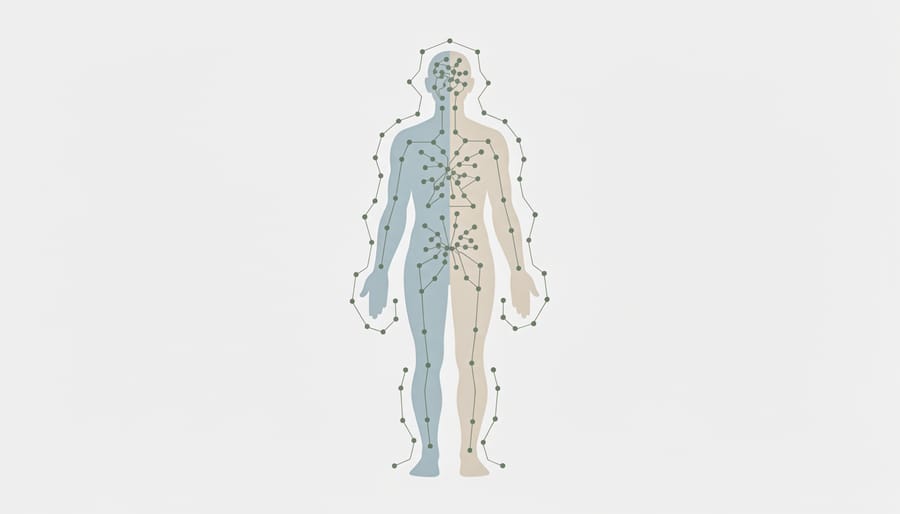
Think of your endocannabinoid system as a three-part messaging network constantly running in the background of your body. Each component plays a distinct role in keeping your internal systems balanced, and understanding them helps explain why cannabis affects us the way it does.
The system operates through three essential players working in concert:
- Endocannabinoids: Chemical messengers your body produces naturally (primarily anandamide and 2-AG) that signal when something needs adjusting
- Cannabinoid receptors: Receiver sites on cell surfaces (CB1 and CB2) that detect these messages and trigger responses
- Enzymes: Cleanup crew molecules (FAAH and MAGL) that break down endocannabinoids once their job is done
Let’s look at each component more closely. Your body produces endocannabinoids on demand, manufacturing them from fats in your cell membranes when needed rather than storing them. Anandamide, sometimes called the “bliss molecule,” influences mood, memory, and pain perception. Scientists named it after the Sanskrit word “ananda,” meaning joy or bliss. The other major player, 2-AG (2-arachidonoylglycerol), works throughout your body and brain, playing a particularly strong role in immune function and inflammation control.
These messengers need somewhere to dock, and that’s where receptors come in. CB1 receptors cluster heavily in your brain and central nervous system, particularly in areas controlling movement, memory, pain sensation, and mood. When activated, they can reduce pain signals, calm anxiety, or stimulate appetite. CB2 receptors live primarily in your immune system and peripheral tissues, influencing inflammation and immune responses. You’ll find them in your spleen, tonsils, and white blood cells.
The final piece is the enzyme system that maintains balance by preventing endocannabinoid overload. FAAH (fatty acid amide hydrolase) breaks down anandamide, while MAGL (monoacylglycerol lipase) dismantles 2-AG. They’re like biological timers, ensuring signals don’t last longer than necessary. This breakdown process is crucial because it allows your ECS to respond dynamically to changing conditions rather than getting stuck in one state.
When you introduce cannabis into this system, you’re essentially adding external compounds that can mimic, enhance, or modulate these natural processes.
The Lock-and-Key Interaction
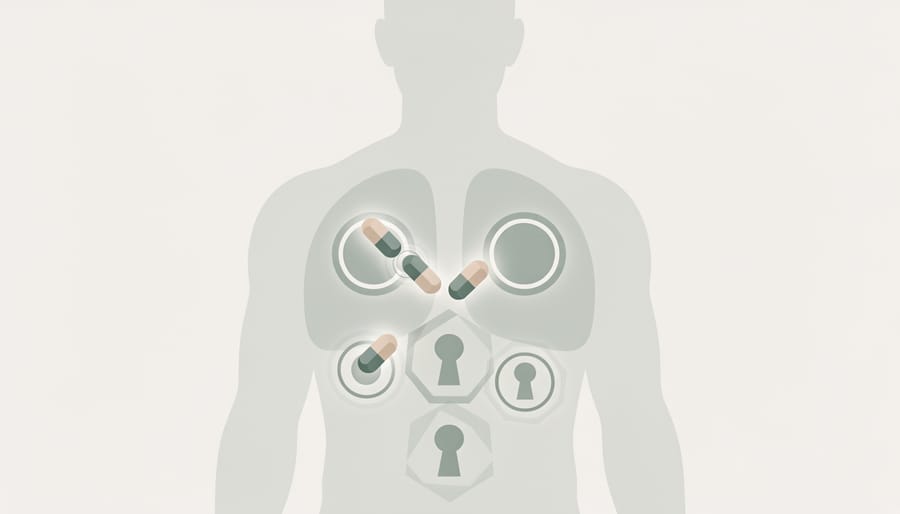
The lock-and-key interaction is one of biology’s most elegant mechanisms, and it’s exactly how your endocannabinoid system communicates. Think of cannabinoid receptors as specialized locks embedded in your cells, and cannabinoids, whether your body produces them or you consume them through cannabis, as the keys that fit those locks.
When a cannabinoid molecule encounters its matching receptor, it fits into a specific binding site on the receptor’s surface. This isn’t a random collision. The cannabinoid’s molecular shape perfectly complements the receptor’s structure, much like a key slides into a lock. Once the cannabinoid binds, it changes the receptor’s shape slightly, activating it.
This activation triggers a cascade of cellular responses. The receptor, now engaged, sends signals inside the cell that can ramp up or dial down various processes. For instance, when anandamide binds to a CB1 receptor in your brain, it might reduce the release of neurotransmitters that transmit pain signals, effectively turning down your perception of discomfort.
What makes this system remarkable is its precision. CB1 receptors respond differently than CB2 receptors because they’re connected to different signaling pathways. A CB1 receptor in your hippocampus might influence memory formation, while a CB2 receptor on an immune cell could modulate inflammation.
The lock-and-key analogy breaks down in one important way: some cannabinoids act as partial keys, binding to receptors but triggering weaker responses. Others work as blockers, preventing other molecules from binding. This variability is why different cannabis compounds produce such distinct effects, they’re all interacting with the same locks, but turning them in different directions.
What Your ECS Regulates
The endocannabinoid system acts as your body’s master regulator, constantly working behind the scenes to keep countless processes in balance. When something shifts, stress spikes your cortisol, an injury triggers inflammation, or you haven’t eaten in hours, the ECS steps in to help restore equilibrium. This is homeostasis in action, and it touches nearly every aspect of how you feel and function day to day.
Your ECS influences an impressive range of physiological systems:
- Mood and emotional regulation, helping manage stress and anxiety responses
- Pain perception and the body’s sensitivity to discomfort
- Appetite and metabolism, controlling hunger signals and energy use
- Sleep-wake cycles and the quality of rest you get
- Immune function and inflammatory responses
- Memory formation and cognitive processing
- Reproductive health and fertility
This wide-reaching influence explains why cannabis, which directly interacts with ECS receptors, can produce such varied effects. It’s not that the plant does dozens of unrelated things; it’s that the system it engages already coordinates these functions naturally. Understanding this connection helps patients and advocates see cannabis therapy not as a miracle cure, but as a tool that works with the body’s existing regulatory network.
How Cannabis Compounds Interact With Your ECS
THC and the CB1 Receptor
THC (tetrahydrocannabinol) fits CB1 receptors like a key slipping into a lock, but with one important difference from your body’s natural endocannabinoids. While anandamide activates these receptors briefly and gently, THC binds more tightly and stays attached longer, producing stronger, more sustained effects.
CB1 receptors cluster densely in your brain and central nervous system, particularly in areas controlling memory, coordination, pleasure, and pain perception. When THC activates these receptors, it triggers the characteristic “high” that cannabis is known for, the euphoria, altered time perception, and heightened sensory experiences. But this same mechanism also drives therapeutic benefits that medical cannabis patients rely on.
For chronic pain sufferers, THC’s interaction with CB1 receptors disrupts pain signals traveling through the nervous system, providing relief that conventional medications sometimes can’t match. Cancer patients and those with appetite loss benefit from THC’s effect on CB1 receptors in the hypothalamus, which regulates hunger, often called “the munchies” recreationally, but a lifeline for maintaining nutrition during illness.
The intensity of THC’s effects depends on dose, consumption method, and individual endocannabinoid system variations. This explains why personalized approaches matter in medical cannabis therapy.
CBD’s Indirect Influence
CBD takes a different route than THC. Instead of locking directly onto CB1 or CB2 receptors, CBD works behind the scenes. It slows the breakdown of anandamide, your body’s natural “bliss molecule”, by inhibiting the enzyme that normally destroys it. This means your own endocannabinoids stick around longer, enhancing their regulatory effects without the psychoactive high.
CBD and the ECS interact through multiple pathways beyond the classic cannabinoid receptors. CBD also influences serotonin receptors (affecting mood and anxiety), vanilloid receptors (involved in pain perception), and GPR55 receptors (linked to inflammation and bone health). This multi-target approach explains why CBD offers therapeutic benefits, reduced anxiety, pain relief, anti-inflammatory effects, without intoxication.
Think of CBD as a systems optimizer rather than a direct stimulant. It doesn’t flood your receptors with foreign signals. Instead, it fine-tunes your existing endocannabinoid activity, supporting balance where your body needs it most. That’s why many patients appreciate CBD for daytime use and functional wellness.
The Entourage Effect
The entourage effect explains why many patients report better results from whole-plant cannabis than from isolated compounds. When you use cannabis, you’re not just getting THC or CBD alone, you’re consuming hundreds of cannabinoids, terpenes, and flavonoids that interact with your endocannabinoid system in complementary ways.
Think of it like an orchestra. While a solo violin can be beautiful, the full symphony creates something richer and more powerful. Similarly, minor cannabinoids like CBG and CBN, along with aromatic terpenes like myrcene and limonene, work alongside major cannabinoids to enhance or modulate their effects. A terpene might help cannabinoids cross the blood-brain barrier more easily, or one cannabinoid might reduce unwanted side effects of another.
This synergy is exactly how CBD works to temper THC’s intensity while amplifying its therapeutic benefits. Research suggests these plant compounds activate multiple pathways in your ECS simultaneously, producing more balanced, effective relief than any single compound could achieve alone. This is why medical cannabis advocates often prefer full-spectrum products over isolates.
Medical Applications: How the ECS Connection Supports Healing
Pain and Inflammation Management
The endocannabinoid system acts as your body’s pain control center, and cannabis taps directly into this network. When you experience pain or inflammation, your ECS typically responds by releasing endocannabinoids that bind to receptors and dampen those signals. Cannabis compounds enhance this natural process, THC activates CB1 receptors in your brain and spinal cord to interrupt pain pathways, while also binding to CB2 receptors in immune cells to reduce inflammatory responses.
This dual action explains why patients with conditions like arthritis, fibromyalgia, and neuropathy often report meaningful relief. Take Sarah, a 52-year-old with rheumatoid arthritis who’d relied on prescription NSAIDs for years. After incorporating a balanced THC:CBD tincture into her routine, she found her morning stiffness diminished and her inflammatory markers improved during follow-up bloodwork. Similarly, veterans managing chronic back pain have described how cannabis helps them reduce opioid dependence by addressing both the sensation of pain and the inflammation driving it.
The cannabinoids essentially supplement what your body already tries to do, they don’t just mask symptoms but work with your existing regulatory system to restore balance where inflammation has created chaos.
Mental Health and Neurological Support
The endocannabinoid system plays a crucial role in emotional balance and brain health, which explains why so many people turn to cannabis for mental health support. Your ECS helps regulate mood, stress response, fear memory processing, and even protects neurons from damage, all functions that become disrupted in conditions like anxiety, PTSD, and epilepsy.
When cannabis compounds interact with your ECS, they can help restore equilibrium in these areas. CBD, for instance, appears to influence serotonin receptors and may reduce anxiety without causing intoxication, while also preventing the breakdown of anandamide, your body’s natural “bliss molecule.” THC’s interaction with CB1 receptors in the brain can offer relief from intrusive thoughts and hyperarousal symptoms common in PTSD, though finding the right dose matters since too much can increase anxiety in some people.
Perhaps the most dramatic example is epilepsy treatment. CBD-rich cannabis products work through multiple pathways in the ECS to reduce seizure frequency, particularly in treatment-resistant forms like Dravet syndrome. The brain’s cannabinoid receptors help modulate neuronal excitability, which is why balancing your ECS through cannabis can calm overactive neural networks that trigger seizures and mood disorders alike.
Appetite, Sleep, and Quality of Life
The endocannabinoid system’s regulation of appetite and sleep cycles offers powerful therapeutic possibilities for patients struggling with these fundamental aspects of wellness. THC activates CB1 receptors in the hypothalamus, triggering hunger signals that help cancer patients counteract treatment-induced wasting and nausea. This same receptor activation in brain regions controlling circadian rhythms explains why many patients report improved sleep onset and duration with cannabis use.
What makes the ECS approach particularly valuable is how it addresses interconnected systems rather than isolated symptoms. A patient who sleeps better often experiences reduced pain sensitivity and improved mood, creating an upward spiral of wellness. Cannabis doesn’t just mask symptoms, it works with your body’s existing regulatory network to restore balance across multiple functions simultaneously, supporting genuine quality of life improvements.
Endocannabinoid System Deficiency: An Emerging Theory
In 2001, researcher Dr. Ethan Russo proposed a compelling question: what if certain chronic conditions stem not from obvious injury or infection, but from an underperforming endocannabinoid system? This hypothesis, known as Clinical Endocannabinoid Deficiency (CECD), suggests that low levels of endocannabinoids or reduced receptor function might leave the body struggling to maintain balance.
The theory emerged from observing patterns among conditions that share similar characteristics, migraines, fibromyalgia, and irritable bowel syndrome, for instance, often resist conventional treatments, overlap in patients, and involve disrupted pain processing and inflammation. Russo noticed these conditions might respond favorably to cannabis therapy, leading him to wonder if they shared a common root: insufficient endocannabinoid tone.
While still considered an emerging theory rather than established medical fact, CECD has gained traction in research circles. Studies measuring endocannabinoid levels in patients with these conditions have found some supporting evidence, though results remain mixed and more rigorous research is needed.
The concept has practical implications for how we approach cannabis therapy. If CECD proves valid, it would explain why some patients find relief through cannabis while others with seemingly similar symptoms don’t, their CBD endocannabinoid system baseline may differ significantly. This understanding pushes treatment toward personalization: finding the right cannabinoid ratio, dose, and delivery method to restore balance rather than applying a one-size-fits-all approach.
As research continues, CECD theory represents the kind of thinking that could transform how we understand chronic illness and the therapeutic potential of cannabis compounds.
Common Questions About the ECS and Cannabis
As more people discover how cannabis interacts with their biology, certain questions come up again and again. Whether you’re new to medical cannabis or helping someone understand their options, these answers clarify the relationship between your body’s endocannabinoid system and the plant compounds that work with it.
Do all humans have an endocannabinoid system?
Yes, every human has an endocannabinoid system, it’s a fundamental biological network that developed hundreds of millions of years ago and exists in all vertebrates. You were born with it, and it’s been working quietly in the background your entire life.
Can you improve your ECS naturally?
Regular exercise, omega-3 fatty acids, stress reduction practices, and adequate sleep all support healthy endocannabinoid function. Some people also explore ECS-focused CBD products as a gentle way to support their system without psychoactive effects.
Does everyone respond to cannabis the same way?
No, individual responses vary based on factors like genetics, existing endocannabinoid tone, metabolism, and even past cannabis exposure. This is why personalized dosing and strain selection matter so much in medical cannabis therapy.
Can cannabis harm the ECS?
Heavy, prolonged use, especially starting in adolescence, may temporarily downregulate cannabinoid receptors, but research suggests the system typically rebalances after a period of abstinence. Moderation and informed use help maintain healthy ECS function.
What’s the difference between endocannabinoids and phytocannabinoids?
Endocannabinoids are cannabinoids your body produces naturally, while phytocannabinoids come from plants, primarily cannabis. Both interact with the same receptor system, which is why plant cannabinoids can influence your body’s processes.
Understanding these fundamentals helps you navigate your own wellness journey with confidence. The endocannabinoid system isn’t just a scientific curiosity, it’s the biological reason cannabis has therapeutic potential, and knowing how your body works with these compounds lets you make choices that truly serve your health goals.
Why Understanding Your ECS Matters
Understanding your endocannabinoid system isn’t just academic knowledge, it’s the foundation for making smarter, more effective decisions about cannabis use. When you know that CBD vs THC work through different mechanisms in your ECS, you can choose products that align with your specific needs rather than relying on trial and error.
This knowledge transforms how you approach medical cannabis. Instead of viewing it as a one-size-fits-all remedy, you recognize why your friend’s favorite strain might not work for you, or why you need different doses at different times. You become an active participant in your wellness journey, able to communicate more effectively with healthcare providers and budtenders about what you’re experiencing and what you’re trying to achieve.
For caregivers and advocates, ECS literacy strengthens your ability to educate others and push for evidence-based policies. You can explain the biological basis for cannabis therapy, countering stigma with science. You’re equipped to advocate for research funding, patient access, and personalized treatment approaches that respect the complexity of human biology rather than imposing rigid restrictions.
Understanding how cannabis works with your endocannabinoid system isn’t just academic knowledge, it’s a practical tool for taking control of your health journey. When you recognize that your body already has receptors designed to interact with cannabinoids, the therapeutic potential of medical cannabis becomes clearer and more accessible.
This knowledge empowers you to ask better questions of healthcare providers, make informed choices about products and dosing, and advocate more effectively for yourself or others. Whether you’re managing chronic pain, supporting a loved one through treatment, or working in the industry, understanding the ECS connection gives you a solid foundation for decision-making.
The science behind cannabis and the endocannabinoid system continues to evolve rapidly. Researchers are uncovering new receptor sites, refining our understanding of cannabinoid interactions, and developing targeted therapies that leverage this biological relationship. We’re still in the early chapters of this story, which makes this an exciting time to be part of the medical cannabis community.
Stay curious. Keep learning. Connect with others who share your interest in cannabis wellness through communities like HempLife Alliance, where education meets advocacy and innovation drives progress. Your body’s endocannabinoid system has been waiting millions of years for you to understand it, now you’re equipped to work with it, not against it.


